Programmieren Tutorium 12
Interfaces, Generics, Rekursion
Gliederung
- Interfaces
- Generics
- Rekursion
Interfaces
Was ist das?
- Definition einer Schnittstelle
- Reine Definition eines Typen (Menge von Methoden-Signaturen)
- kann zur Typisierung verwendet werden
- Eine Klasse
C, die ein InterfaceIimplementiert, bildet einen Subtyp vonI
- Eine Klasse
- Vergleichbar mit komplett abstrakter Klasse
Verwendung
// Interface-Deklaration
interface Foo {
    static final int QUUX = 42;
    void foo();
}

// Implementierung
class Bar implements Foo, Baz {
    @Override
    public void foo() { ... }
}

Foo f = new Bar();
Vererbung
interface I {
    void foo();
}

interface J extends I, K {
    void bar();
}
- Interfaces können voneinander erben
- Mehrfachvererbung möglich
Übungsaufgabe
WS 12/13, ÜB 5
Aufgabe A.1
Generics
(parametrisierte Typen)
Was ist das?
Die Idee dahinter ist, zusätzliche Variablen für Typen einzuführen. Diese Typ-Variablen repräsentieren zum Zeitpunkt der Implementierung unbekannte Typen. Erst bei der Verwendung der Klassen, Schnittstellen und Methoden werden diese Typ-Variablen durch konkrete Typen ersetzt.
Wofür ist das gut?
Code von Container-Datentypen (und anderen Datenstrukturen) ist unabhängig vom Typ der Basisdaten
Verwendung
interface Foo<T> { ... }
class Bar<T> { ... }
class Baz implements Foo<Integer> { ... }
class Quux<T, U> implements Foo<T> { ... }

// Example
Bar<Integer> b = new Bar<Integer>();
// Ab Java 7 (Diamond operator)
Bar<Integer> b = new Bar<>();
- Typ-Parameter können nur Referenz-Typen sein
- Bei Primitives Wrapper benutzen
Einschränkung der Typen
// T muss vom Typ Bar sein
class Foo<T extends Bar> { ... }
// T muss von den Typen Bar, Baz und Quux sein
class Foo<T extends Bar & Baz & Quux> { ... }
- Zulässige Typen können eingeschränkt werden
Generische Methoden
public class GenericMethods {
    public static <T> T random(T m, T n) {
        return Math.random() > 0.5 ? m : n;
    }

    public static <T> T random(List<T> list) {
        return list.get(Math.round(Math.random() * (list.size - 1)));
    }
}
- Auch bei nicht-statischen Methoden möglich
Vererbung
// Not OK
List<Object> foos           = new ArrayList<Foo>();

// OK
List<Foo> foos              = new ArrayList<>();
List<?> foos                = new ArrayList<Foo>();
List<? extends Foo> foos    = new ArrayList<Foo>();
?kann als Wildcard verwendet werden
Will it compile?
public static T max(T x, T y) {
    return x > y ? x : y;
}
public static void print(List<? extends Number> list) {
    for (Number n : list)
        System.out.print(n + " ");
    System.out.println();
}
Nein, Ja
Will it compile?
class Shape { /* ... */ }
class Circle extends Shape { /* ... */ }
class Rectangle extends Shape { /* ... */ }
class Node<T> { /* ... */ }

Node<Circle> nc = new Node<>();
Node<Shape>  ns = nc;
class Node<T> implements Comparable<T> {
    // ...
    public int compareTo(T obj) { /* ... */ }
}

Node<String> node = new Node<>();
Comparable<String> comp = node;
Nein, Ja
Will they code?
- Write a generic method to count the number of elements in a collection that have a specific property (for example, odd integers, prime numbers, palindromes).
- Write a generic method to exchange the positions of two different elements in an array.
- Write a generic method to find the maximal element in the range [begin, end) of a list.
Rekursion
Was ist das?
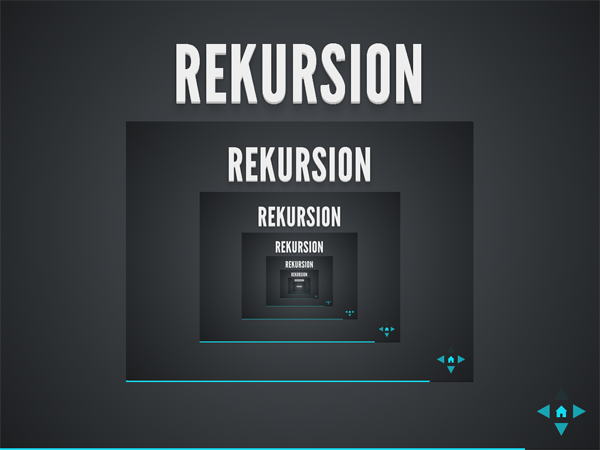
Eine Methode f heißt rekursiv, wenn im Rumpf von f Aufrufe von f vorkommen.
Beispiel
public static long fac(final int n) {
    if (n < 2) {
        return 1;
    } else {
        return n * fac(n - 1);
    }
}

// Und das Ganze nochmal kürzer
public static long fac(final int n) {
    return (n < 2) ? 1 : n * fac(n - 1);
}
Übungsaufgabe
Implementiert binäre Suche auf einem int-Array rekursiv
Feierabend!